Discuss maternity and newborn care in Spanish with our medical Spanish course: vocabulary and phrases for clinicians and support staff.
Last updated: June 16, 2026 Changes: Reviewed by Jessica Munoz DNP, RN, CEN
Why give us your email? We'll send you common Spanish healthcare phrases straight to your inbox along with other helpful resources. We respect your privacy and won't share your information.
English
Spanish
Are you in pain?
¿Tiene dolor?
When was your last meal?
¿Cuándo comió por última vez?
Do you have any allergies?
¿Es alérgico(a) a algo?
Can you stand?
¿Puede ponerse de pie?
Are you bleeding?
¿Está sangrando?
Are you nauseous?
¿Tiene náuseas?
Who do you live with?
¿Con quien vive?
Are there smokers in the house?
¿Hay fumadores en su casa?
Do you want your baby vaccinated for hepatitis B?
¿Quiere que vacunemos a su bebé contra la hepatitis B?
Do you have a car seat?
¿Tiene silla para bebés en el coche?
Are you interested in birth control?
¿Está usted interesada en programas de control de natalidad?
Have you had any miscarriages?
¿Ha tenido usted algún aborto natural?
Have you had any abortions?
¿Ha tenido usted algún aborto?
Are there any pets in the house?
¿Hay animales en casa?
Do you have a crib?
¿Tiene una cuna?
Would you like a pacifier for the baby?
¿Querría un chupete para el bebé?
Do you understand these instructions?
¿Entiende estas instrucciones?
Do you feel this?
¿Siente usted esto?
Can you move your legs?
¿Puede mover sus piernas?
Would you like a wheelchair?
¿Le gustaría una silla de ruedas?
Do you have allergies?
¿Tiene alérgica a algo?
Have you had any previous surgeries?
¿Ha tenido intervenciones quirúrgicas previas?
Did you have any complications with your other pregnancies?
¿Ha tenido alguna complicación en embarazos anteriores?
Would you like to hold the baby?
¿Le gustaría sostener al bebé?
Do need more pads?
¿Necesita usted más compresas?
Would you like to speak with the chaplain?
¿Le gustaría hablar con el capellán?
Are you happy?
¿Está usted feliz?
Are you sad?
¿Está usted triste?
Do you have support at home?
¿Tiene usted apoyo en casa?
Are you anxious or worried?
¿Está usted ansiosa(o) o preocupada(o)?
Does your family or partner have questions for me?
¿Su familia o compañero(a) tienen alguna pregunta para mí?
Have you thought of harming yourself?
¿Ha tenido pensamientos acerca de autolesionarse?
Are you sleeping well?
¿Está durmiendo bien?
Any redness at your incision?
¿Hay enrojecimiento en su herida?
Any drainage at your incision site?
¿Hay secreción en su herida?
Would you like the flu vaccination?
¿Le gustaría vacunarse de la gripe?
Would you like the pertussis vaccination?
¿Le gustaría vacunarse de tos ferina?
Are you sexually active again?
¿Eres sexualmente activa de nuevo (a)?
Would you like for the baby to go to the nursery?
¿Le gustaría que su bebé fuese a la guardería?
Would you like some free formula samples?
¿Quiere algunas muestras gratuitas de fórmula?
Is this your first child?
¿Este es su primer hijo(a)?
Does your baby have any allergies?
¿Es su bebé alérgico a algo?
How old is the baby?
¿Cuántos años tiene el niño(a)?
Is this your biological baby, or is he or she adopted?
¿Es su hijo(a) biológico(a), o es adoptado(a)?
Is the baby having breast milk or formula?
¿Su hijo(a) está tomando leche materna o formula?
Let me please examine your child
Por favor, déjeme examinar a su hijo(a).
Your baby is premature.
Su bebe es prematura(o)
How old was the baby when he/she got his first tooth?
¿A qué edad le salió su primer diente?
When did your baby start to walk?
¿Cuándo empezó a caminar su bebé?
Your baby is short, for his/her age
Su bebé es de talla baja para su edad
Is the baby suckling and swallowing properly?
¿El bebé succiona y traga adecuadamente?
Is the baby's diet diverse?
¿La alimentación del bebé es variada?
Can the baby drink from a bottle?
¿El bebé usa biberón?
Does the baby use diapers?
¿El bebé utiliza pañal?
How is the baby's behavior?
¿Cómo es el comportamiento del bebé?
What are the baby's sleeping habits?
¿Cuáles son los hábitos de sueño del bebé?
How many hours does the baby sleep?
¿Cuántas horas duerme el bebé?
Can the baby climb stairs?
¿El bebé puede subir escaleras?
Does the baby have a vocabulary of 4–10 words?
¿El bebé puede decir 4–10 palabras?
Does the baby identify body parts?
¿El bebé identifica partes del cuerpo?
Can the baby drink from a cup?
¿El bebé puede beber en un vaso?
Can the baby wave bye?
¿El bebé dice adiós?
Can the baby imitate?
¿El bebé imita?
Can the baby say 1 or 2 words?
¿El bebé dice 1 o 2 palabras?
Does the baby understand simple questions?
¿El bebé entiende preguntas simples?
Can the baby stand up?
¿El bebé puede ponerse de pie?
Does the baby feel agitated among strangers?
¿El bebé se siente angustiado ante extraños?
Does the baby look for hidden objects?
¿El bebé busca objetos escondidos?
What are the baby's first words? (mom, dad)
¿Cuáles fueron las primeras palabras del bebé? ¿Papá? ¿Mamá?
Does the baby recognize his/her name?
¿El bebé reconoce su nombre?
Can the baby sit without support?
¿El bebé se sienta sin apoyo?
Does the baby cry or scream to call attention?
¿El bebé grita o llora para llamar la atención?
Can the baby recognize strange sounds?
¿El bebé reconoce sonidos extraños?
Does the baby babble?
¿El bebé balbucea?
Is the baby capable of sitting with support?
¿El bebé puede mantenerse sentado con apoyo?
Does the baby point at objects?
¿El bebé apunta a los objetos?
Does the baby roll over?
¿El bebé se da vuelta?
Can the baby laugh?
¿El bebé se ríe?
Does the baby react to sounds or is attentive when talked to?
¿El bebé se gira buscando sonidos o atiende a conversaciones?
Can the baby grab objects?
¿Agarra objetos?
Does the baby look at his hands or follow objects?
¿El bebé mira sus manos o sigue objetos con la mirada?
Does the baby look at you?
¿Su bebé le mira?
Does the baby calm down when talked to?
¿Reacciona a voz, calmándose?
Does the baby smile?
¿Sonríe?
Do the baby's eyes follow your movements?
¿Su bebé sigue sus movimientos con su mirada?
What is the frequency of the bowel movements?
¿Cuál es el ritmo de deposiciones?
Did your bag of waters break?
¿Ha roto aguas?
Was the water clear?
¿El agua era clara?
Have you had any contractions?
¿Ha tenido contracciones?
Have you had any bleeding?
¿Ha tenido sangrados?
Is this your first pregnancy?
¿Es este su primer embarazo?
Can you spread your legs?
¿Puede separar las piernas?
My hands may feel cold
Mis manos pueden sentirse frías.
The monitor is to check the baby's heartbeat.
La pantalla es para verificar el latido cardiaco del bebé.
The strap will measure your contractions.
La correa medirá sus contracciones.
The baby's heartbeat is normal.
El latido cardíaco del bebé es normal.
Can you feel the baby moving?
¿Puede sentir como el bebé se mueve?
The baby's head is down.
La cabeza del bebé está hacia abajo.
The cervix is not dilated.
El cérvix no está dilatado.
The cervix is starting to dilate.
El cérvix comienza a dilatarse.
Do you want an epidural for pain?
¿Quiere una epidural para el dolor?
It is time to push the baby out.
Es hora de empujar al bebé hacia afuera.
When the contraction happens, pull back your legs and push.
Cuando tenga una contracción, lleve las piernas hacia atrás y empuje.
The baby's head is visible.
Vemos la cabeza del bebé.
Keep pushing.
Siga empujando.
Lie on your left side.
Acuéstese sobre su lado izquierdo.
You will need an episiotomy.
Necesitará una episiotomía.
You will need stitches.
Necesitará puntos de sutura.
You will feel pain when I inject the numbing medication.
Sentirá dolor cuando le ponga la anestesia.
I need to suction the baby's nose and mouth.
Tengo que aspirar la nariz y boca del bebé.
I need to put the baby in a warmer.
Tengo que poner al bebé en una incubadora / calentador.
I need to check the baby's weight.
Tengo que medir el peso del bebé.
I need to push on your stomach.
Tengo que apretar su estómago.
Can you hold your breath when you push?
Puede aguantar la respiración mientras empuja?
Do you want the baby's footprints?
¿Quiere las huellas del bebé?
The baby needs an examination.
El bebé necesita un examen.
The baby is a girl.
El bebé es una niña.
The baby is a boy.
El bebé es un niño.
The baby is healthy.
El bebé está sano.
I will remove the epidural
Voy a retirar la epidural.
The cervix is completely dilated.
El cérvix está completamente dilatado.
I need to insert a bladder catheter.
Necesito ponerle un catéter vesical.
Did you have a long last labor?
¿Ha tenido un alumbramiento largo?
The baby's feet are down.
Los pies del bebé están abajo.
You need a cesarean section.
Necesita que le realicemos una cesárea.
Are the contractions close together?
¿Las contracciones son muy seguidas?
Have you named the baby?
¿Ya le ha puesto nombre al bebé?
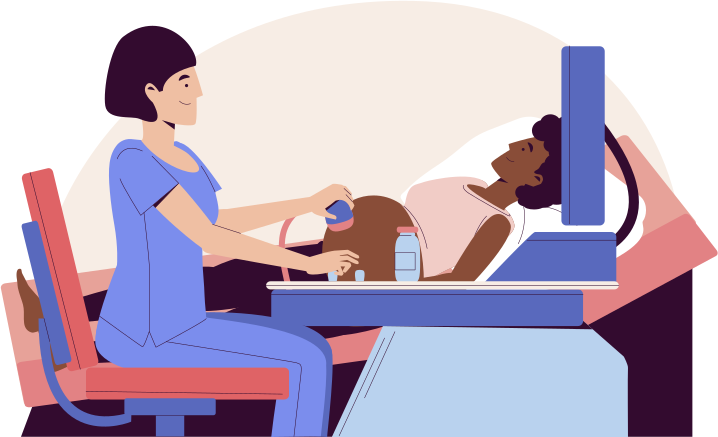
I need to do an ultrasound.
Tengo que hacer una ecografía.
Hello, I am the pediatric nurse practitioner.
Hola, soy la enfermera pediátrica.
Do you speak a little Spanish?
¿Hablas un poco de español?
Do you speak English?
¿Habla inglés?
Does anyone speak English?
¿Hay alguien que hable inglés?
How do you feel today?
¿Cómo se siente hoy?
Do you have questions?
¿Usted tiene preguntas?
I will get the interpreter
Buscaré al intérprete.
We will see you tomorrow
Nos vemos mañana.
How is the baby?
¿Cómo está el bebé?
Your baby is doing fine.
Su bebé está bien.
Are you breast feeding?
¿Está amamantando?
Does the baby latch-on well to the breast?
¿El bebé está agarrándose bien al pezón?
Baby's weight is very good.
El peso del bebé es muy bueno.
What pediatrician will you use for the baby?
¿Qué pediatra va a usar para el bebé?
Your baby is jaundiced or yellow.
Su bebé tiene ictericia o está amarillo.
I will order a blood test for the jaundice.
Voy a solicitar un análisis de sangre para la ictericia.
Do you want the baby circumcised?
¿Quieren que circunciden al bebé?
It is where the foreskin from the penis is cut off.
Es donde se corta el prepucio del pene.
It is not a necessary procedure.
No es un procedimiento necesario.
Additional study materials
We have partnered with Learn With Echo in order to provide materials that will assist in your pronunciation of the phrases you just studied. You can listen to a slower version of the phrases, record your voice as you pronounce the phrases, and play your voice back and compare it to the voice of a native Spanish speaker.
Need CPR this year? Take English and Spanish together: you get the certification course and the Spanish twin in the same cart. Spanish is free when English CPR is in the cart.
Word practice pages
Patient orientation
Learn to assist patients with basic movements during their stay.